
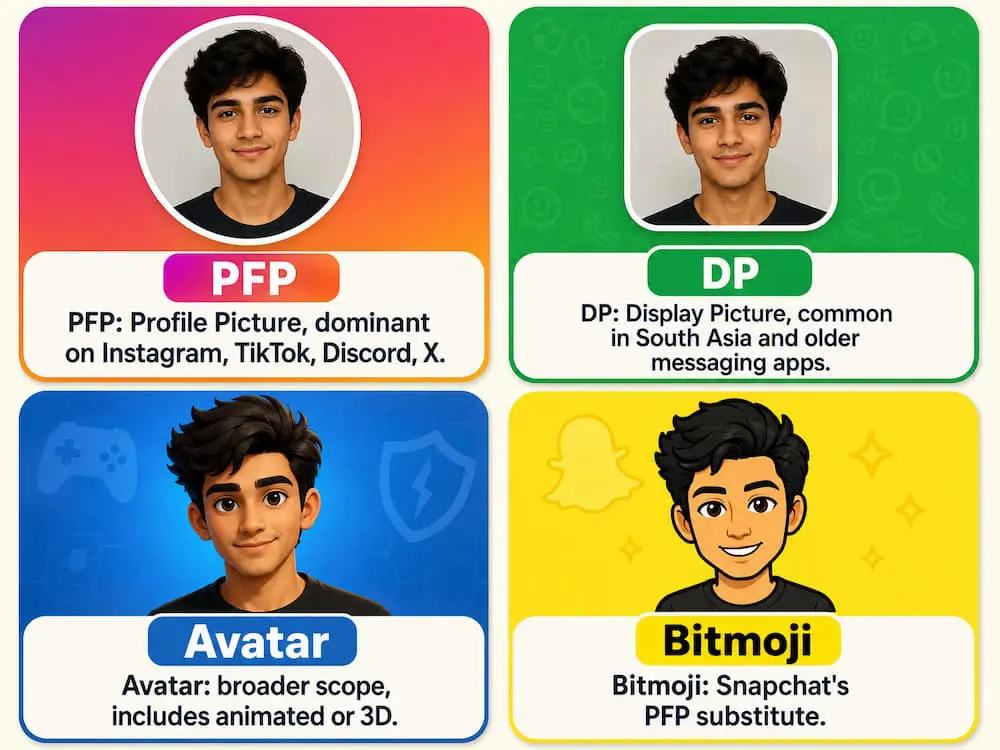
Profile pictures have become an important part of how people present themselves online. Whether you call it a DP or a PFP, that small image beside your username can communicate personality, interests, mood, and even the type of online community you belong to.
The terms may sound different, but they usually refer to the same basic idea: the image representing your account. In 2026, however, the way people use profile pictures has become more creative. Instead of simply uploading a photograph, many users are choosing avatars, illustrations, digital artwork, and customized designs that give their profiles a more distinctive identity.
DP vs PFP: Is There Actually a Difference?
The main difference is usually terminology rather than function.
DP stands for display picture, a term that became particularly common through messaging and social networking. PFP stands for profile picture and is now widely used across social platforms, gaming communities, forums, and other online spaces.
Both terms describe an image used to represent an account. The choice of wording often depends on the community or application where the person is using it.
What has changed is the variety of images people now use. A profile picture no longer has to be a simple photograph. It can represent an online persona, a hobby, a favorite aesthetic, or a completely separate digital identity.
What Does Your Profile Picture Say About You?
Your profile picture can create an impression before anyone reads your bio or looks at your posts.
A professional headshot can suggest that an account is focused on career or business. A colorful illustration may communicate creativity, while a gaming character can immediately show an interest in a particular type of entertainment.
Minimalist images can create a clean and modern impression. Darker artwork may feel more mysterious, while bright and playful designs can appear energetic.
Of course, people should not be judged entirely by their profile picture. An avatar is only one part of an online identity. Still, it can influence how someone initially perceives an account.
Why Originality Matters More in 2026
The internet is filled with repeated visual trends. The same characters, templates, poses, filters, and design styles can appear across thousands of accounts.
This makes originality increasingly valuable.
People who want a more recognizable identity often look beyond generic images and explore original pfps that better match their personality or interests.
An original-looking image does not necessarily mean creating an entirely new piece of artwork. It can involve choosing an unusual composition, using a distinctive color combination, selecting an uncommon character style, or customizing an existing concept.
The objective is to create something that feels connected to your identity rather than something selected randomly.
The PFP Bridge Between Your Image and Identity
Think of your profile picture as a pfp bridge between your visual identity and the rest of your profile.
Your username tells people what to call you. Your bio provides information about you. Your posts show your interests and opinions. The profile picture connects these elements visually.
For example, if your username has a creative theme and your bio talks about digital art, a simple but artistic avatar can reinforce the same message.
This consistency can make your profile easier to remember.
Choosing Between a Photo and an Avatar
There is no universal answer when deciding whether to use a photograph or an avatar.
A photograph can be useful when recognition and authenticity are important. It allows people to associate your account with your actual appearance and can work particularly well for professional profiles.
An avatar offers greater creative freedom. You can represent yourself through a character, illustration, symbol, or artistic design without revealing your appearance.
Privacy is another reason some people prefer avatars. They can participate in online communities while maintaining more separation between their digital identity and personal life.
How to Choose a Better PFP
A good profile picture should work even when displayed at a small size.
Keep the Main Subject Clear
Avoid images where the important subject is hidden among too many details. Faces, characters, and simple symbols tend to remain recognizable when reduced.
Consider the Background
A complicated background can distract from the main subject. A cleaner background often makes the profile picture easier to recognize.
Use Strong Contrast
The subject should stand out from its surroundings. Good contrast helps an image remain visible on both light and dark interfaces.
Think About Consistency
If you have multiple online accounts, consider maintaining a similar visual theme. You do not need to use exactly the same picture everywhere, but related colors or design elements can make your identity easier to recognize.
Should You Change Your Profile Picture Often?
Changing a profile picture can give your account a fresh appearance, but doing it too frequently may make you harder to recognize.
If your account depends on personal recognition, consider keeping the same general style while making occasional updates.
For example, you could keep a recognizable character while changing the background or colors. This gives your profile a fresh look without completely replacing its identity.
Final Thoughts
The difference between a DP and a PFP is mostly about terminology, but the role of the profile picture has continued to evolve. In 2026, these small images can represent much more than an account.
They can communicate personality, interests, creativity, privacy preferences, and online identity.
Whether you choose a photograph, illustration, character, or custom avatar, the most important thing is that the image feels intentional. A recognizable and personal profile picture can make it easier for others to remember you and understand the identity behind your account.
Your profile picture does not need to be complicated to stand out. It simply needs to feel like it belongs to you.